Places of the Bible
Mizpah
A city of Benjamin · City
Where the name appears
Events told in passages that name Mizpah, and how many of their verses do. That is not the same as saying they happened here: a place can be named as a landmark, as somewhere being travelled to, or as the subject of a prophecy.
A dot is a moment; a bar is something that lasted, drawn to its length. The fainter the mark, the fewer verses name the place.
- Reign of Saul · 1094 BC · 1 verse
- Prophecies of Jeremiah · 627 BC · 12 verses
Easton’s Bible Dictionary
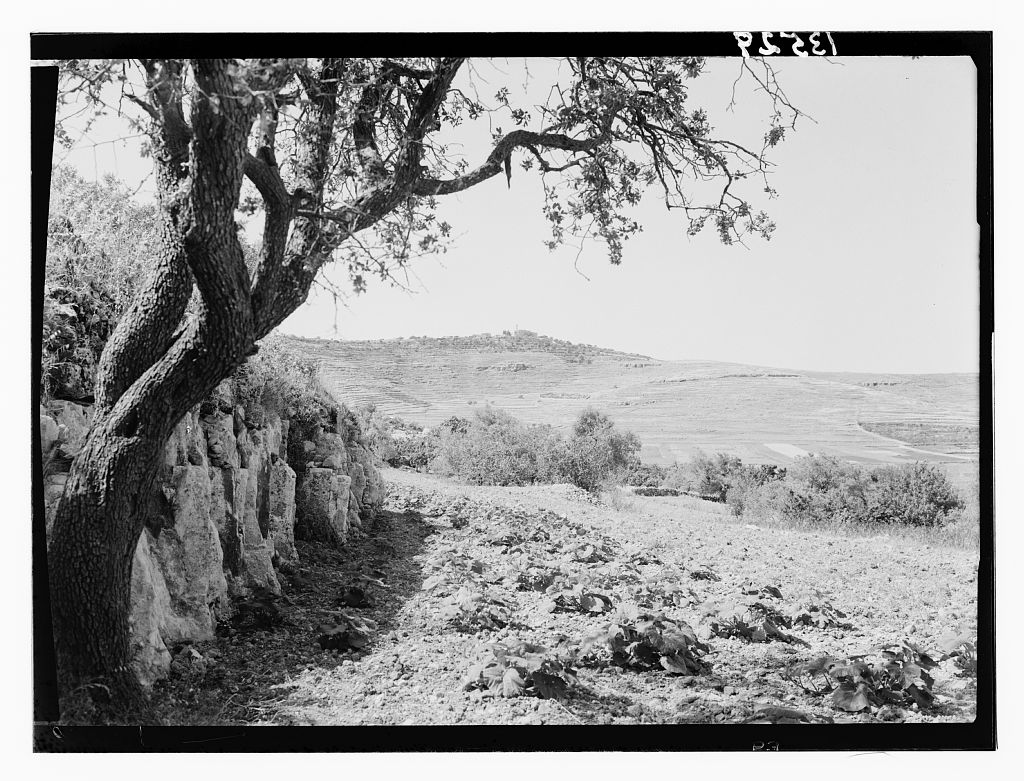
A city of Benjamin, “the watch-tower”, where the people were accustomed to meet in great national emergencies (Josh. 18:26; Judg. 20:1, 3; 21:1, 5; 1 Sam. 7:5-16). It has been supposed to be the same as Nob (1 Sam. 21:1; 22:9-19). It was some 4 miles north-west of Jerusalem, and was situated on the loftiest hill in the neighbourhood, some 600 feet above the plain of Gibeon. This village has the modern name of Neby Samwil, i.e., the prophet Samuel, from a tradition that Samuel’s tomb is here.
Samuel inaugurated the reformation that characterized his time by convening a great assembly of all Israel at Mizpeh, now the politico-religious centre of the nation. There, in deep humiliation on account of their sins, they renewed their vows and entered again into covenant with the God of their fathers. It was a period of great religious awakening and of revived national life. The Philistines heard of this assembly, and came up against Israel. The Hebrews charged the Philistine host with great fury, and they were totally routed. Samuel commemorated this signal victory by erecting a memorial-stone, which he called “Ebenezer” (q.v.), saying, “Hitherto hath the Lord helped us” (1 Sam. 7:7-12).
From M. G. Easton, Illustrated Bible Dictionary (1893), in the public domain.
Named in 30 verses
- Judges
- 20:1, 20:3, 21:1, 21:5, 21:8
- 1 Samuel
- 7:5, 7:6, 7:7, 7:11, 7:12, 7:16, 10:17
- 2 Kings
- 25:23, 25:25
- 2 Chronicles
- 16:6
- Nehemiah
- 3:7, 3:15, 3:19
- Jeremiah
- 40:6, 40:8, 40:10, 40:12, 40:13, 40:15, 41:1, 41:3, 41:6, 41:10, 41:14, 41:16
The place, its people and its events come from Theographic, a knowledge graph of the Bible by Robert Rouse, used and shared under CC BY-SA 4.0.