Places of the Bible
Ramah
A city first mentioned in Josh. 18:25 · City
Where the name appears
Events told in passages that name Ramah, and how many of their verses do. That is not the same as saying they happened here: a place can be named as a landmark, as somewhere being travelled to, or as the subject of a prophecy.
A dot is a moment; a bar is something that lasted, drawn to its length. The fainter the mark, the fewer verses name the place.
- Deliverance by Barak And Deborah · 1277 BC · 1 verse
- Reign of Asa · 954 BC · 3 verses
- Prophecies of Hosea · 784 BC · 1 verse
- Prophecies of Isaiah · 758 BC · 1 verse
- Prophecies of Jeremiah · 627 BC · 2 verses
Easton’s Bible Dictionary
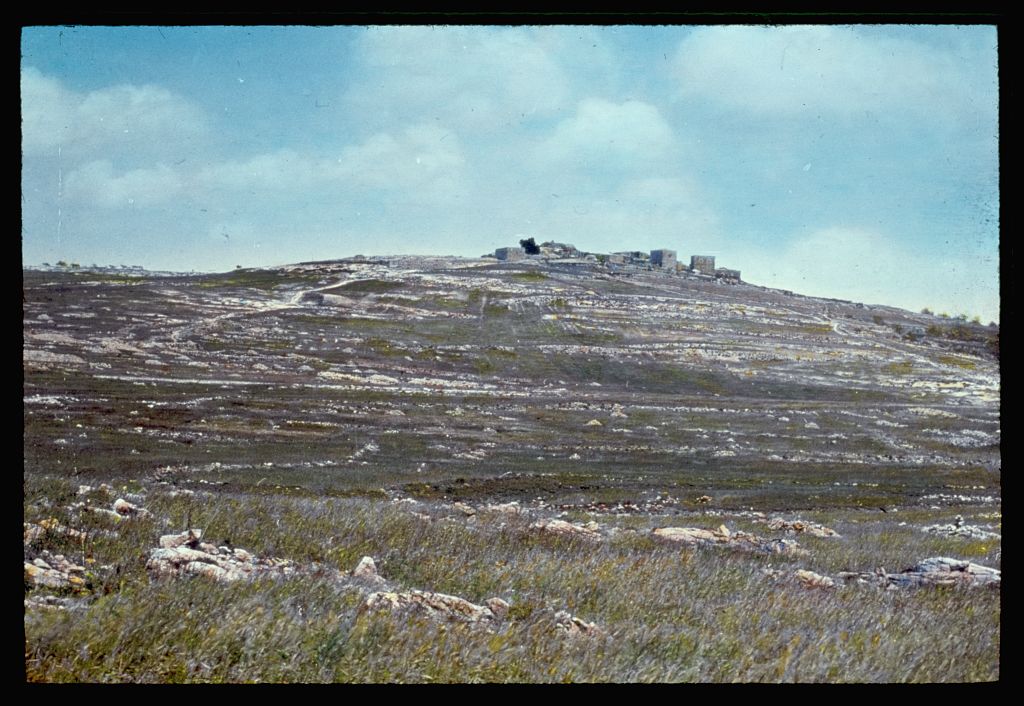
A city first mentioned in Josh. 18:25, near Gibeah of Benjamin. It was fortified by Baasha, king of Israel (1 Kings 15:17-22; 2 Chr. 16:1-6). Asa, king of Judah, employed Benhadad the Syrian king to drive Baasha from this city (1 Kings 15:18, 20). Isaiah (10:29) refers to it, and also Jeremiah, who was once a prisoner there among the other captives of Jerusalem when it was taken by Nebuchadnezzar (Jer. 39:8-12; 40:1). Rachel, whose tomb lies close to Bethlehem, is represented as weeping in Ramah (Jer. 31:15) for her slaughtered children. This prophecy is illustrated and fulfilled in the re-awakening of Rachel’s grief at the slaughter of the infants in Bethlehem (Matt. 2:18). It is identified with the modern village of er-Ram, between Gibeon and Beeroth, about 5 miles due north of Jerusalem.
From M. G. Easton, Illustrated Bible Dictionary (1893), in the public domain.
Named in 17 verses
- Joshua
- 18:25, 19:8
- Judges
- 4:5, 19:13
- 1 Kings
- 15:17, 15:21, 15:22
- 2 Chronicles
- 16:1, 16:5, 16:6
- Ezra
- 2:26
- Nehemiah
- 7:30, 11:33
- Isaiah
- 10:29
- Jeremiah
- 31:15, 40:1
- Hosea
- 5:8
The place, its people and its events come from Theographic, a knowledge graph of the Bible by Robert Rouse, used and shared under CC BY-SA 4.0.