Places of the Bible
Aphek
A city of the tribe of Issachar · City
Where the name appears
Events told in passages that name Aphek, and how many of their verses do. That is not the same as saying they happened here: a place can be named as a landmark, as somewhere being travelled to, or as the subject of a prophecy.
A dot is a moment; a bar is something that lasted, drawn to its length. The fainter the mark, the fewer verses name the place.
- War with Canaanites · 1450 BC · 1 verse
- Reign of Saul · 1094 BC · 1 verse
What the spade found
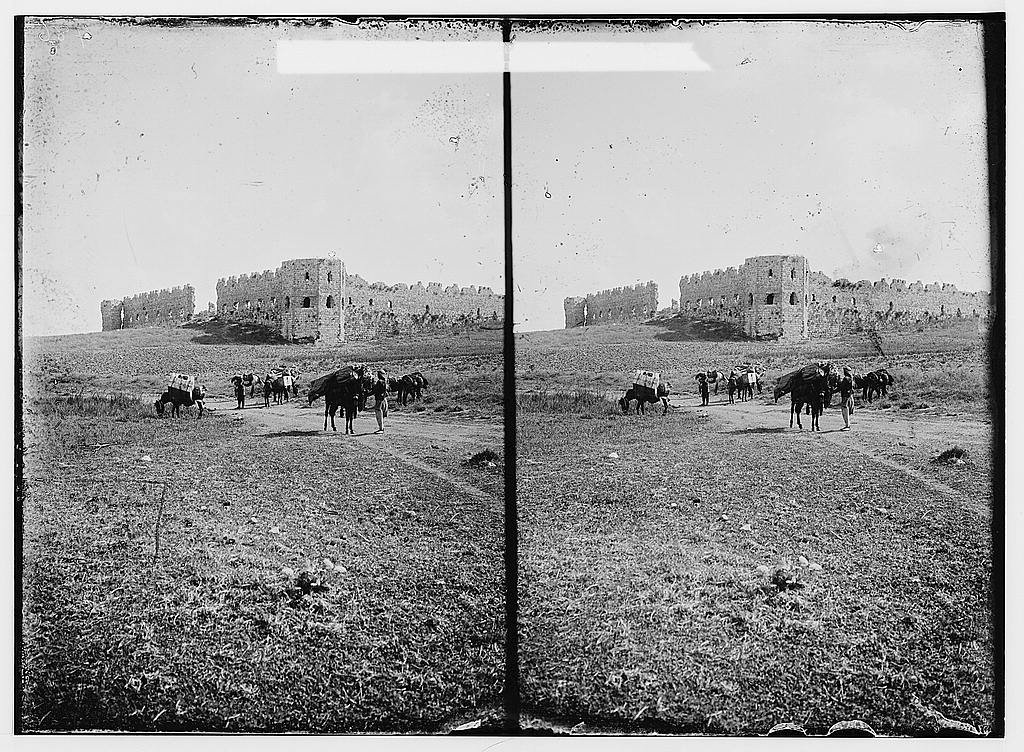
Aphek is generally identified with Tel Afeq, a tell — a mound raised by one settlement built on the ruins of the last. It has been excavated, and at its largest covered 6 hectares.
Occupation shows in 12 dated phases: Chalcolithic, Early Bronze Age I, Early Bronze Age II, Middle Bronze Age I, Middle Bronze Age II-III, Late Bronze Age, Iron Age I, Iron Age IIa, Iron Age IIb-c, Hellenistic, Roman, Byzantine.
The excavation is from the survey dataset From Villages to Empires (Zanoni and others, 2025), used under CC BY 4.0. The identification is the one modern scholarship settles on, compiled by OpenBible.info from over seventy works, also under CC BY 4.0. Identifying a mound with a biblical name is a scholarly judgement, and for some places it is still debated.
Easton’s Bible Dictionary
A city of the tribe of Issachar, near to Jezreel (1 Sam. 4:1; 29:1; comp. 28:4).
From M. G. Easton, Illustrated Bible Dictionary (1893), in the public domain.
Named in 3 verses
The place, its people and its events come from Theographic, a knowledge graph of the Bible by Robert Rouse, used and shared under CC BY-SA 4.0.