Places of the Bible
Euphrates
River · river
Where the name appears
Events told in passages that name Euphrates, and how many of their verses do. That is not the same as saying they happened here: a place can be named as a landmark, as somewhere being travelled to, or as the subject of a prophecy.
A dot is a moment; a bar is something that lasted, drawn to its length. The fainter the mark, the fewer verses name the place.
- Creation of Adam and Eve · 4003 BC · 1 verse
- Crossing the Jordan into Canaan · 1450 BC · 1 verse
- Reign of David · 1054 BC · 2 verses
- Reign of Solomon · 1014 BC · 2 verses
- Reign of Jeroboam I · 974 BC · 1 verse
- Prophecies of Isaiah · 758 BC · 1 verse
- Reign of Josiah · 640 BC · 1 verse
- Prophecies of Jeremiah · 627 BC · 8 verses
- Death of Josiah · 608 BC · 1 verse
- Reign of Jehoiakim · 608 BC · 1 verse
Easton’s Bible Dictionary
Hebrew, Perath; Assyrian, Purat; Persian cuneiform, Ufratush, whence Greek Euphrates, meaning “sweet water.” The Assyrian name means “the stream,” or “the great stream.” It is generally called in the Bible simply “the river” (Ex. 23:31), or “the great river” (Deut. 1:7).
The Euphrates is first mentioned in Gen. 2:14 as one of the rivers of Paradise. It is next mentioned in connection with the covenant which God entered into with Abraham (15:18), when he promised to his descendants the land from the river of Egypt to the river Euphrates (comp. Deut. 11:24; Josh. 1:4), a covenant promise afterwards fulfilled in the extended conquests of David (2 Sam. 8:2-14; 1 Chr. 18:3; 1 Kings 4:24). It was then the boundary of the kingdom to the north-east. In the ancient history of Assyria, and Babylon, and Egypt many events are recorded in which mention is made of the “great river.” Just as the Nile represented in prophecy the power of Egypt, so the Euphrates represented the Assyrian power (Isa. 8:7; Jer. 2:18).
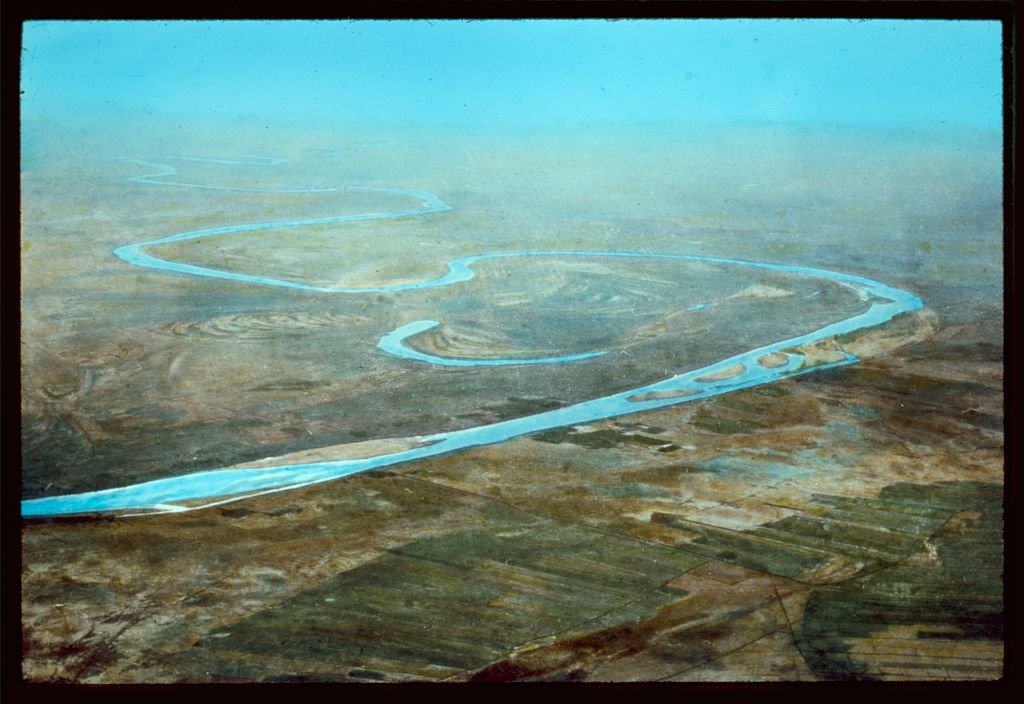
It is by far the largest and most important of all the rivers of Western Asia. From its source in the Armenian mountains to the Persian Gulf, into which it empties itself, it has a course of about 1,700 miles. It has two sources, (1) the Frat or Kara-su (i.e., “the black river”), which rises 25 miles north-east of Erzeroum; and (2) the Muradchai (i.e., “the river of desire”), which rises near Ararat, on the northern slope of Ala-tagh. At Kebban Maden, 400 miles from the source of the former, and 270 from that of the latter, they meet and form the majestic stream, which is at length joined by the Tigris at Koornah, after which it is called Shat-el-Arab, which runs in a deep and broad stream for above 140 miles to the sea. It is estimated that the alluvium brought down by these rivers encroaches on the sea at the rate of about one mile in thirty years.
From M. G. Easton, Illustrated Bible Dictionary (1893), in the public domain.
Named in 32 verses
- Genesis
- 2:14, 15:18, 31:21, 36:37
- Exodus
- 23:31
- Deuteronomy
- 1:7, 11:24
- Joshua
- 1:4
- 2 Samuel
- 8:3, 10:16
- 1 Kings
- 4:21, 4:24, 14:15
- 2 Kings
- 23:29, 24:7
- 1 Chronicles
- 1:48, 5:9, 18:3, 19:16
- 2 Chronicles
- 9:26, 35:20
- Isaiah
- 27:12
- Jeremiah
- 13:4, 13:5, 13:6, 13:7, 46:2, 46:6, 46:10, 51:63
- Revelation
- 9:14, 16:12
The place, its people and its events come from Theographic, a knowledge graph of the Bible by Robert Rouse, used and shared under CC BY-SA 4.0.