Places of the Bible
Megiddo
City
What happened here
- Death of Josiah · 608 BC
Where the name appears
Events told in passages that name Megiddo, and how many of their verses do. That is not the same as saying they happened here: a place can be named as a landmark, as somewhere being travelled to, or as the subject of a prophecy.
A dot is a moment; a bar is something that lasted, drawn to its length. The fainter the mark, the fewer verses name the place.
- War with Canaanites · 1450 BC · 1 verse
- Deliverance by Barak And Deborah · 1277 BC · 1 verse
- Reign of Solomon · 1014 BC · 2 verses
- Reign of Jehu · 885 BC · 1 verse
- Reign of Josiah · 640 BC · 2 verses
- Prophecies of Zechariah · 519 BC · 1 verse
Easton’s Bible Dictionary
Place of troops, originally one of the royal cities of the Canaanites (Josh. 12:21), belonged to the tribe of Manasseh (Judg. 1:27), but does not seem to have been fully occupied by the Israelites till the time of Solomon (1 Kings 4:12; 9:15).
The valley or plain of Megiddo was part of the plain of Esdraelon, the great battle-field of Palestine. It was here Barak gained a notable victory over Jabin, the king of Hazor, whose general, Sisera, led on the hostile army. Barak rallied the warriors of the northern tribes, and under the encouragement of Deborah (q.v.), the prophetess, attacked the Canaanites in the great plain. The army of Sisera was thrown into complete confusion, and was engulfed in the waters of the Kishon, which had risen and overflowed its banks (Judg. 4:5).
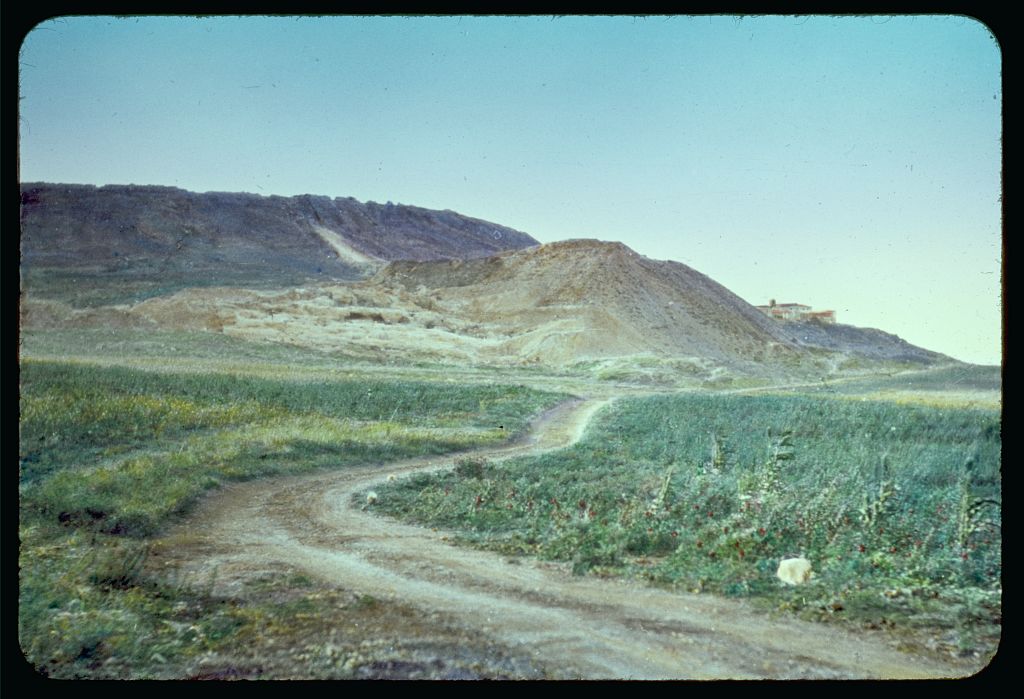
Many years after this (B.C. 610), Pharaohnecho II., on his march against the king of Assyria, passed through the plains of Philistia and Sharon; and King Josiah, attempting to bar his progress in the plain of Megiddo, was defeated by the Egyptians. He was wounded in battle, and died as they bore him away in his chariot towards Jerusalem (2 Kings 23:29; 2 Chr. 35:22-24), and all Israel mourned for him. So general and bitter was this mourning that it became a proverb, to which Zechariah (12:11, 12) alludes. Megiddo has been identified with the modern el-Lejjun, at the head of the Kishon, under the north-eastern brow of Carmel, on the south-western edge of the plain of Esdraelon, and 9 miles west of Jezreel. Others identify it with Mujedd’a, 4 miles south-west of Bethshean, but the question of its site is still undetermined.
From M. G. Easton, Illustrated Bible Dictionary (1893), in the public domain.
Named in 12 verses
- Joshua
- 12:21, 17:11
- Judges
- 1:27, 5:19
- 1 Kings
- 4:12, 9:15
- 2 Kings
- 9:27, 23:29, 23:30
- 1 Chronicles
- 7:29
- 2 Chronicles
- 35:22
- Zechariah
- 12:11
The place, its people and its events come from Theographic, a knowledge graph of the Bible by Robert Rouse, used and shared under CC BY-SA 4.0.