Places of the Bible
Sidon
City
What happened here
A dot is a moment; a bar is something that lasted, drawn to its length.
- Healing Canaanite Daughter · 29 AD
- Journey to Rome begins · 56 AD
- Paul's Journey to Rome · 56 AD
Where the name appears
Events told in passages that name Sidon, and how many of their verses do. That is not the same as saying they happened here: a place can be named as a landmark, as somewhere being travelled to, or as the subject of a prophecy.
A dot is a moment; a bar is something that lasted, drawn to its length. The fainter the mark, the fewer verses name the place. The numbers are the lines below.
- 1 War with Canaanites · 1450 BC · 1 verse
- 2 Oppression by Ammon and Philistia · 1169 BC · 1 verse
- 3 Reign of David · 1054 BC · 1 verse
- 4 Prophecies of Elijah · 909 BC · 1 verse
- 5 Prophecies of Joel · 819 BC · 1 verse
- 6 Prophecies of Isaiah · 758 BC · 3 verses
- 7 Prophecies of Jeremiah · 627 BC · 3 verses
- 8 Prophecies of Ezekiel · 592 BC · 3 verses
- 9 Prophecies of Zechariah · 519 BC · 1 verse
- 10 Jesus Rejected at Nazareth · 27 AD · 1 verse
- 11 Woe to Chorazin and Bethsaida · 28 AD · 2 verses
- 12 Healing Multitudes · 28 AD · 2 verses
- 13 Healing a Crowd near Sea of Galilee · 29 AD · 1 verse
- 14 70 Sent Out · 29 AD · 2 verses
- 15 Herod dies · 45 AD · 1 verse
Easton’s Bible Dictionary
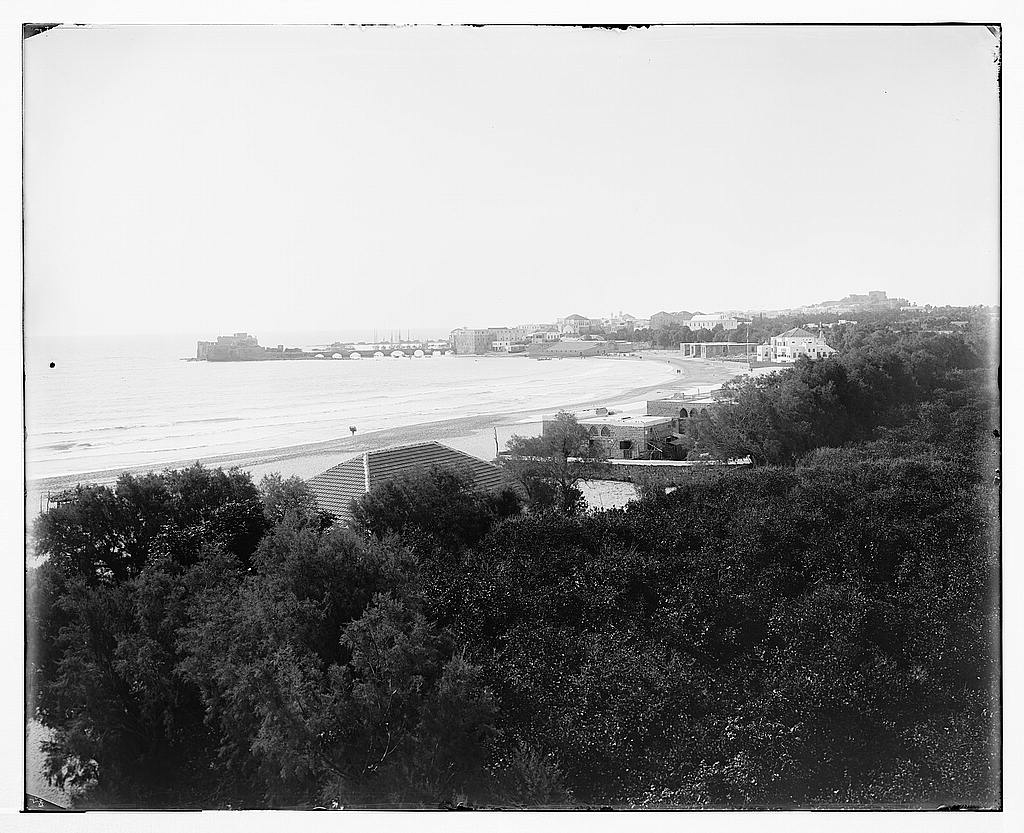
A fishery, a town on the Mediterranean coast, about 25 miles north of Tyre. It received its name from the “first-born” of Canaan, the grandson of Noah (Gen. 10:15, 19). It was the first home of the Phoenicians on the coast of Palestine, and from its extensive commercial relations became a “great” city (Josh. 11:8; 19:28). It was the mother city of Tyre. It lay within the lot of the tribe of Asher, but was never subdued (Judg. 1:31). The Zidonians long oppressed Israel (Judg. 10:12). From the time of David its glory began to wane, and Tyre, its “virgin daughter” (Isa. 23:12), rose to its place of pre-eminence. Solomon entered into a matrimonial alliance with the Zidonians, and thus their form of idolatrous worship found a place in the land of Israel (1 Kings 11:1, 33). This city was famous for its manufactures and arts, as well as for its commerce (1 Kings 5:6; 1 Chr. 22:4; Ezek. 27:8). It is frequently referred to by the prophets (Isa. 23:2, 4, 12; Jer. 25:22; 27:3; 47:4; Ezek. 27:8; 28:21, 22; 32:30; Joel 3:4). Our Lord visited the “coasts” of Tyre and Zidon = Sidon (q.v.), Matt. 15:21; Mark 7:24; Luke 4:26; and from this region many came forth to hear him preaching (Mark 3:8; Luke 6:17). From Sidon, at which the ship put in after leaving Caesarea, Paul finally sailed for Rome (Acts 27:3, 4).
This city is now a town of 10,000 inhabitants, with remains of walls built in the twelfth century A.D. In 1855, the sarcophagus of Eshmanezer was discovered. From a Phoenician inscription on its lid, it appears that he was a “king of the Sidonians,” probably in the third century B.C., and that his mother was a priestess of Ashtoreth, “the goddess of the Sidonians.” In this inscription Baal is mentioned as the chief god of the Sidonians.
From M. G. Easton, Illustrated Bible Dictionary (1893), in the public domain.
Named in 32 verses
- Genesis
- 10:19, 49:13
- Joshua
- 11:8, 19:28
- Judges
- 1:31, 10:6, 18:28
- 2 Samuel
- 24:6
- 1 Kings
- 17:9
- Isaiah
- 23:2, 23:4, 23:12
- Jeremiah
- 25:22, 27:3, 47:4
- Ezekiel
- 27:8, 28:21, 28:22
- Joel
- 3:4
- Zechariah
- 9:2
- Matthew
- 11:21, 11:22, 15:21
- Mark
- 3:8, 7:24, 7:31
- Luke
- 4:26, 6:17, 10:13, 10:14
- Acts
- 12:20, 27:3
The place, its people and its events come from Theographic, a knowledge graph of the Bible by Robert Rouse, used and shared under CC BY-SA 4.0.